
California
3 nov
Democratic
87 grupos · 1583 votantes
Experiencia
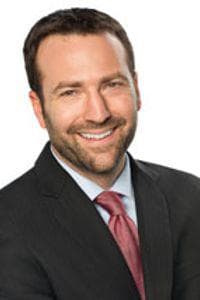
State Senator
California State Senate
2014 a hoy
Adjunct Faculty
UCLA Law School
2011 a 2014
Of Counsel
Richardson and Patel LLP
2011 a 2014
Board Member
Santa Monica-Malibu Unified School District
2008 a 2014
Litigator
Bryan Cave LLP
Judicial Clerk
United Nations' International Criminal Tribunal for Rwanda
87
Toca + para agregarlo a tu boleta.

Elizabeth Barcohana's Lady with a Brain Voter Guide
Dirigido por Elizabeth Barcohana · 885 votantes

GrowSF's Voting Group
Publicado por Sway
We recommend voting for Ben Allen for Insurance Commissioner. Allen has the experience, knowledge, and track record to fix California's broken insurance market.
In the June primary we endorsed Patrick Wolff while mentioning that Ben Allen was also a good choice. Unfortunately, Patrick Wolff lost, so the November election is a head-to-head matchup between Ben Allen and Jane Kim. We strongly recommend Ben Allen and strongly oppose Jane Kim.
California's insurance market is broken. Insurance companies are leaving the state, the state-run FAIR Plan has blown up to 610,000+ policies (https://www.piawest.com/news-releases-and-bulletins/california-fair-plan-exposure-up-drastically-in-2025/) (up 154% since 2021), and homeowners in fire-prone areas are getting pushed into a bare-bones backup plan that just asked for a 36% rate hike (https://stateline.org/2025/10/24/californias-last-resort-property-insurer-seeks-rate-hike-ringing-national-alarm-bells/). The next Insurance Commissioner needs to understand what's actually broken and how to fix it. Only one candidate in this race does.
Why vote for Ben Allen?
Allen has spent over a decade working on insurance, climate, and consumer protection. As a State Senator, he represents the communities devastated by the Palisades Fire, where he spent the aftermath helping hundreds of constituents fight for their insurance claims, an experience he calls "a front-row seat to our broken insurance system." He watched the FAIR Plan nearly collapse under $4 billion in losses (https://www.washingtonpost.com/weather/2025/02/11/fair-plan-payment-property-insurance/) from the LA fires, with the costs spread to policyholders statewide through a $1 billion emergency assessment (https://www.insurance.ca.gov/0250-insurers/0300-insurers/0200-bulletins/bulletin-notices-commiss-opinion/upload/Bulletin-2025-4-Updated-Guidance-regarding-Insurer-Recoupment-Procedures-in-Response-to-Assessment-by-the-FAIR-Plan.pdf), and he drew the right lesson: letting the FAIR Plan grow unchecked creates systemic risk for everyone.
"Standing amid smoke, ashes, and uncertainty, I saw what failure looks like."
Ben Allen, California State Senator
Allen didn't wait for tragedy before acting, though. In 2024, a year before the Palisades Fire, he authored Proposition 4 (https://ballotpedia.org/California_Proposition_4,_Climate_Bond_(2024)) to authorize a $10 billion bond for wildfire risk reduction and water infrastructure that voters approved. While other candidates talk in vague terms about affordability while dodging questions about their relevant experience (https://x.com/ZavalaA/status/2081551393408901530), Allen has already put $10 billion to work reducing the risk that makes insurance expensive in the first place.
His plan for the office pairs regulatory flexibility with hard accountability: insurers get more flexibility to price risk accurately so taxpayers won't be forced to bail them out after a disaster, and in exchange they must actually write and renew policies in California. He also wants an independent consumer advocate inside the Department of Insurance, public dashboards tracking insurer behavior, and a ban on Commissioners working for the insurance industry after leaving office. You can read his full plans in his answers to our questionnaire (https://growsf.org/voter-guide/questionnaires/june-2026/benjamin-allen/).
Why not Jane Kim?
Jane Kim is a career politician who went from being a San Francisco Supervisor, to losing her run for State Senate, to running a socialist political party (the Working Families Party), and now wants a state takeover of disaster insurance. She has no insurance experience, no insurance license, and no financial services background. She's running on a plan called "Disaster Insurance for All" (https://www.janekim.org/): a government-run program that would replace private disaster coverage. You'd pay a fee to the state, and the state would cover wildfires, earthquakes, and floods. Private insurers would have no reason to stick around. The next big wildfire or earthquake means either a massive taxpayer bailout or a wave of unpaid claims.
In theory, this could work, but it would depend on the state accurately pricing risk. The private market is in a crisis precisely because the state has not let insurers price risk accurately. Kim's plan would make that problem worse, not better.
Her plan reveals a fundamental misunderstanding of what insurance is. Insurance works by pricing risk and spreading it across a big pool. Kim won't commit to pricing risk. When pressed on it, she told Washington Monthly (https://washingtonmonthly.com/2026/07/13/jane-kim-california-home-insurance-crisis/): "I imagine we would look at both value and risk, but one of the goals is to make sure that [coverage] is affordable." This hedging worries economists. Holding rates down for affordability is precisely how you end up not charging for risk. When fire-prone homes don't pay what their risk actually costs, people who live in fire-safe cities like San Francisco pay more. Insurance prices are supposed to make people think twice about building in dangerous places. When that signal is weakened, more people will move to fire-prone areas, more homes will burn, and San Franciscans will pay even more to cover it.
In short, Jane Kim wants to end private disaster insurance and dump everyone into one state-run account that mis-prices the actual risks, then hope nothing bad ever happens.
We've already seen this movie in California. The FAIR Plan, the state's existing backup insurer, got hit with $4 billion in losses (https://www.washingtonpost.com/weather/2025/02/11/fair-plan-payment-property-insurance/) from the LA fires, ran out of money, and had to charge private insurers a $1 billion emergency fee (https://www.insurance.ca.gov/0250-insurers/0300-insurers/0200-bulletins/bulletin-notices-commiss-opinion/upload/Bulletin-2025-4-Updated-Guidance-regarding-Insurer-Recoupment-Procedures-in-Response-to-Assessment-by-the-FAIR-Plan.pdf) just to stay alive. That's with only 610,000 policies. Kim wants to put every California homeowner on a plan like this.
The models she points to aren't success stories either: New Zealand's earthquake insurer was overwhelmed after the 2011 Christchurch quake (https://www.rnz.co.nz/news/national/504862/class-action-launched-claiming-eqc-underpaid-christchurch-quake-victims), underpaid people for over a decade, and is now getting sued.
We are not alone in this read. The San Francisco Chronicle's editorial board endorsed Allen (https://www.sfchronicle.com/opinion/article/insurance-commissioner-california-allen-kim-22321376.php) under the headline "One candidate is ready to be California's insurance commissioner. The other would be a disaster." It called Kim "as rash as they come," said her platform is "politically seductive" but "a recipe for disaster," and pointed to her 2016 Prop C, the inclusionary housing rates that supervisors had to cut three times because projects stopped penciling out. Its conclusion: "If Prop C is an example of how Kim would operate as insurance commissioner, voters should run screaming."
This race is a choice between a legislator who has spent a decade on the problem and a candidate whose plan would make it dramatically worse. Ben Allen understands how insurance works and has already done more than anyone in this race to fix it. That's why he has our endorsement.
Rick's Picks
Dirigido por Rick Raushenbush · 93 votantes
While both candidates are running as Democrats, there is a huge difference between Democrat Ben Allen and “Democrat” Jane Kim (who actually belongs to the Working Families Party). Allen wants to improve the private insurance market while Kim wants the government to take over important parts of it. In my view, Kim’s proposals would place taxpayers at risk of massive payouts following a natural catastrophe that would force significant cuts in many other programs, require an expensive bureaucracy to administer claIms, and drive out private insurers. Difficulty purchasing private insurance already have forced many homeowners on to the California FAIR Plan—Kim’s proposals likely will make things much worse. See https://www.sfchronicle.com/opinion/article/insurance-commissioner-california-allen-kim-22321376.php. I endorse Ben Allen.
Ben Allen is a 12-year California State Senator, who sponsored a climate change mitigation bond and proposed insurance reform legislation. The Palisades Fire burned his home, spurring his interest in reforming insurer practices and California’s insurance market. Per https://capitolweekly.net/meet-the-insurance-commissioner-candidates-sen-ben-allen/: “Californians deserve access to reliable insurance no matter where they live. As Insurance Commissioner, I would focus on stabilizing the market by pairing strong consumer protections with real investments in wildfire prevention and home-hardening.” “The Insurance Commissioner must protect consumers from unjustified rate hikes while ensuring companies can meet their obligations. I would demand transparency in rate filings, push back on increases that aren’t supported by the facts, and ensure insurers properly account for risk-reduction efforts. Over the long term, preventing losses through wildfire mitigation is the most effective way to control rates.” Many Californians now cannot obtain home insurance other than through the FAIR Plan, which is less comprehensive coverage. Per Allen: “The FAIR Plan should be a strong safety net, not a permanent solution for families who want comprehensive coverage. I will work to improve its financial stability, strengthen claims handling and customer service, and reduce long-term reliance on it by expanding access to the private market.”
Jane Kim is a former San Francisco supervisor, worked on the Bernie Sanders 2020 presidential campaign, and is the state director of the Working Families Party. Kim wants to create a public disaster insurance program, require all policies to provide full replacement value, prevent companies from raising rates after someone files a home or auto claim, and “end price discrimination for auto insurance.” Kim also believes the state should centralize all insurance authority within the Insurance Department, including managed health care. She asserts that insurers are making record profits and using disasters as an excuse to raise premiums.
Kim’s proposals (if adopted) at best would impose massive costs on California taxpayers and her election likely would cause private insurers to flee California. She wants public Natural Disaster Insurance for All, apparently run by the State, which would impose the cost of staffing like an insurance company. “Everyone” would pay premiums “based on factors like property value or risk,” but at the same time it “could guarantee coverage in high-risk areas,” a “portion of the state pool could be invested in resilience infrastructure,” and “could also support low-income households with mitigation.” https://www.janekim.org/issues/lowercosts. The State, of course, would be the ultimate guarantor, if the fund did not have enough to pay all claIms arising from a catastrophe. That seems likely as Kim also would set minimum standards that require “Guaranteed replacement cost for total losses,” including inflation and compliance with new building codes.” https://www.janekim.org/issues/guaranteedcoverage. Not only would the public insurance have to meet these requirements, but so would private insurers, thus eliminating the ability to homeowners to choose their coverage depending on cost. Kim also wants an “affordable public option for auto insurance available to everyone.” Kim would also bar insurers from raising your premiums, or dropping coverage, because you file claims. But assessing risk is exactly how insurers set premiums—if you have a greater risk of a claim, you should pay a higher premium, rather than imposing your higher risk on the cost of everyone’s insurance.
Government should not be in the business of individual property insurance; taxpayers should not be guarantors that everyone’s property losses are covered. Individuals should purchase insurance from private insurers, in a competitive market place, with regulations to ensure proper claim handling and ensuring that insurance rates reflect actual losses, claim reserves and a reasonable rate of return.

San Francisco and California urbanism
Dirigido por Barak Gila · 49 votantes
In San Francisco, Jane Kim deliberately sabotaged our home production goals, raising fees so that projects wouldn't be financially viable. As a candidate for insurance commissioner, she's threatened to freeze insurance rates in a way that might make it no longer viable for insurers to operate in the state. Vote for Ben Allen, instead. He's a CA State Senator from Socal whose district was affected by the recent fires, and experienced firsthand some of the resulting issues around home insurance.

Election Day is Every Tuesday
Dirigido por Ariella Elm · 370 votantes
Ben Allen is currently my state senator, I’ve met him a few times. I really respect him and trust him.

CA Votes Progressive
Dirigido por June Paniouchkine · 31 votantes
Ben Allen.
Let me put some more nuance here since it's an awkward office to run for:
Insurance Commissioner is primarily responsible for regulating how insurance companies provide rates, who they cover, and what they do with their float.
For you and me, who probably aren't homeowners, and probably don't have the capacity to buy property insurance anytime soon, the first two pieces aren't very important. Sure, they're good to watch for, but they don't affect us for the most part.
None of the candidates running for this office have explicitly mentioned or highlighted the third part.
The third part of the office is the most important for regulating the market as a whole. What insurance companies do with our premiums, by investing it across several low-to-high risk funds, can have significant implications for the market's health. This impact is multiplied in the private credit market.
Insurance Commissioners can require that insurance investment funds publicly label their investments and the associated risk behind them, placing a key check on private investors playing with the state's insurance market and threatening to destabilize the lives of claimants should a massive disaster happen again like the Palisades fire.
By requiring public disclosures of what insurance investors do with the money and certifying public credit risk assessments, the insurance commissioner would be utilizing the full power of their office to manipulate the market for good and protect California's insurance market from the impending credit crisis facing the nation as a whole. Once one of the candidates marks that as a priority, I'll be inclined to switch support to them or further support them.
Notably however, Ben safely advocates for insurance to not be a huge behemoth taking advantage of climate prone areas while also keeping these companies stable enough to provide coverage at reasonable rates.
Jane’s platform highlights a divestment from private investments by insurance companies, eliminating their float and making the rich even more angry and fueling them for republican opposition. A public model doesn’t work for California not only because we don’t have public health insurance yet, which should be first, but it also threatens to actually trickle down from mom and pop landlords bearing the brunt of a rise in cost from the public option, making it more unaffordable for renters to be in California. For those reasons, I’d go with the safer option in Ben Allen.

Los Angeles Daily News' Voting Group
Publicado por Sway
California voters are facing a number of significant races in the general election ranging from the high-profile contest to fill an open governor’s seat to an initiative that could limit local tax increases. Yet the race for the little-followed position of insurance commissioner could have the most reverberations. Quite simply, the insurance industry (https://www.wsj.com/articles/insurance-companies-are-quietly-fleeing-california-proposition-103-natural-disaster-state-farm-market-competition-ricardo-lara-commissioner-db0af00) — the lifeblood of the state’s real estate market — is facing an existential threat.
We don’t issue such warnings lightly. As many beleaguered homeowners know, California’s property insurance market (https://judiciary.house.gov/committee-activity/hearings/california-fires-and-consequences-overregulation) has been in a free fall since 2023, after State Farm — the dominant home-insurance underwriter — stopped writing new policies. Other companies pulled back. The proximate cause: Costly wildfires threatened their financial stability. The fundamental cause: California’s system of insurance price controls had impeded their ability to adjust rates to meet risk.
So insurers started pulling back, leaving record numbers of Californians scrambling for insurance, underinsured or dependent on the state-created FAIR (Fair Access to Insurance Requirements) Plan (https://www.cbsnews.com/sanfrancisco/news/california-fair-plan-insurers-incentivized-policies-last-resort/). As a result, that safety-net insurer approached the financial brink. Although slow to react, Commissioner Ricardo Lara created the Sustainable Insurance Strategy — a series of significant reforms that have stabilized the market and bolstered the FAIR Plan. Insurance is still too expensive, but California’s market is recovering.
That brings us to the current election. It pits state Sen. Ben Allen (https://www.benallenca.com/), D-Santa Monica, against Jane Kim, the former San Francisco supervisor and one-time state director of the far-left Working Families Party. She received the most votes in the primary in a crowded field. We had endorsed Patrick Wolff, an insurance expert, but were impressed with Allen, also. He brings a wealth of legislative experience to the table, and is thoughtful, detail-oriented and not particularly ideological — important traits for an office that oversees a large humdrum bureaucracy.
Most important: Allen is committed to continuing the Lara-era reforms (https://www.insurance.ca.gov/01-consumers/180-climate-change/sustainable-insurance-strategy.Cfm) that are steadily restoring the health of the property insurance industry. He’s sure to back some initiatives regarding, say, climate change, that give us heartburn, but he understands insurance markets and is committed to generating competition and staying the reform course. That is the key to restoring the industry’s health and assuring that consumers can find affordable policies.
Enter Kim. She has no real insurance background. She is an ideologue who promises to socialize a large portion of the home-insurance industry. Not only will that put taxpayers on the hook for liabilities now assumed by private companies, it will turn over matters to government agencies. We’re not surmising here — Kim proudly boasts (https://jacobin.com/2026/02/natural-disaster-insurance-california-wildfires) about her plans. Anyone who has watched California’s government operate over the last few decades knows that any such “disaster insurance for all” system will be bureaucratic, wasteful and plagued with scandal.
As we argued in our primary editorial (https://www.ocregister.com/2026/04/26/endorsement-patrick-wolff-for-state-insurance-commissioner/), “She wants a publicly run single-payer system, which would destroy California’s market. Even if she’s unable to implement these long-timeframe proposals, she would trigger a further exodus of insurers with her trial-lawyer/consumer-activist approach to insurance regulation.” If you think disaster insurance is problematic now, just wait until government runs it.
We understand homeowners’ frustration with insurance companies, but the answer is not to turn the system over to bureaucrats, activists and unions. Your ability to find affordable, quality insurance may depend on this election outcome.
We strongly urge a vote for Ben Allen.
Source (https://www.dailynews.com/2026/08/16/endorsement-ben-allen-for-insurance-commissioner/)

Mercury News' Voting Group
Publicado por Sway
There is no greater looming threat to affordability in California than its home insurance crisis.
Housing prices in the state have played the central role in its loss of residents to other states for two decades, but insurance costs have not. Strict consumer protections since the late 1980s kept premiums down to among the lowest in the country.
But increasingly devastating wildfires are unraveling one of the last bargains Californians have enjoyed.
Over the last four years, carriers have retreated from the state entirely or have paused writing new policies. Rates have risen sharply across the Bay Area.
Meanwhile, homeowners throughout the region — from rural Sonoma County to suburban San Jose — have been pushed into the FAIR Plan, the state’s high-risk pool offering expensive, limited coverage. Disconcertingly yet unsurprisingly, the prospect of rising premiums is sinking home sales.
With the Nov. 3 election approaching, California voters must understand: When they choose between the two Democrats — Ben Allen and Jane Kim (https://www.mercurynews.com/2026/07/15/who-are-democrats-kim-and-allen-californias-insurance-commissioner-candidates/) — running to replace termed-out Insurance Commissioner Ricardo Lara, the viability of homeownership is on the ballot.
Ben Allen is our choice to navigate California through this unprecedented crisis.
Here is how we reached our decision in favor of the 48-year-old state senator who has represented western Los Angeles County, including areas destroyed by the Palisades Fire, for 12 years.
Since Californians passed Proposition 103 in 1988, the insurance commissioner has had powerful independent authority over the country’s largest property and casualty insurance market. Insurers, for example, must receive approval from the commissioner’s Department of Insurance before they can raise rates.
However, as powerful as this office is, many underlying causes of today’s metastasizing crisis — climate change, land-use policies, construction costs and fire suppression tactics — lie outside of the commissioner’s direct control.
Allen — who placed second in the June primary with 19% of the vote — understands the limits of this office. In fact, he is the only candidate who consistently frames the problem as a system-wide challenge necessitating that insurers, lawmakers, developers, homeowners and polluters align.
Treat the causes
As Allen explained to our editorial board (https://www.mercurynews.com/2026/05/22/ben-allen-california-insurance-commissioner-candidate-answers-bay-area-news-groups-primary-questionnaire/), the next commissioner must work hand in glove with the state Legislature on policies that will materially lower risks. That means updating our building codes to require more fire-resistant materials; revising our land-use policies to minimize building in predictably flammable areas at the edge of wildlands; and disincentivizing oil companies from further exacerbating climate change.
These changes are the preconditions for lower rates.
Allen’s advantages are twofold:
He is humble enough to acknowledge the insurance commissioner cannot solve this problem by fiat, and he has the legislative record and relationships in Sacramento that will be necessary to craft broader solutions.
Further, unlike Kim, Allen has already been working on these issues in the Legislature. He co-authored Prop. 4, a $10 billion statewide wildfire prevention and climate resilience bond approved by voters in 2024.
Doing this job right requires navigating state politics, negotiating with competing economic interest groups and managing a 1,400-person bureaucracy that oversees more than 1,600 insurance companies. Ben Allen convinced us he could operate inside this maze. His opponent, Jane Kim, did not.
Unaffordable experiment
Kim recognizes, correctly, that the private insurance market is struggling to absorb climate risk.
But the 49-year-old former San Francisco County supervisor’s solution — a single-payer-style public disaster insurance program — is poorly defined and presents an enormous risk for a state struggling with chronic deficits.
Kim — who won 27% of the vote, the most among the 11 candidates in the June primary — points to New Zealand as a proof of concept. But we already have an example of a state-run insurance program here in the U.S. The National Flood Insurance Program is in constant financial distress as its premiums routinely fail to cover the escalating costs created by ever-larger, disastrous floods.
Californians cannot afford Kim’s experiment.
Kim has raised about $1 million for her campaign. Her top donors include unions for teachers, nurses and service workers. An independent campaign committee sponsored by the California Chamber of Commerce has spent $1.5 million to oppose her.
Allen’s campaign has raised about $1.6 million, with top donors including a mix of business and labor interests. He has also won the endorsement of the California Democratic Party.
Whoever wins has no easy options.
Over-regulating could scare more insurers away; under-regulating could inflate prices even more. Meanwhile, the conditions for deadlier and more destructive wildfires at the intersection of nature and our cities keep growing. And there is no end in sight.
There is only one candidate who grasps the complexity of this crisis and has the legislative experience to address it.
That is Ben Allen.

Nevada County GOP 2026 Endorsements
Publicado por Sway
Ben Allen is recommended, not endorsed, because he is not Republican. However, the committee agreed that he is the better choice out of the two. Only Democrats are running; we recommend Ben Allen

UAW's Endorsements
Publicado por Sway
Miembros de Sway que les escriben a votantes por Ben Allen
Escríbeles a votantes con Turnout para aparecer en esta clasificación.

*Ben Allen is the least bad candidate. Everyone of the candidates I endorsed won their primaries, with the exception of Insurance Commissioner. Unfortunately, no Republican made it through as a result of vote-splitting among 4 candidates against the CA GOP endorsement.
So, in November we are faced with a decision between two Democrats, Ben Allen or Jane Kim.
The decision to recommend Allen as the least bad candidate was a simple process of elimination.
Kim is on the San Francisco Board of Supervisors, and serves as the California Director for Bernie Sanders and the Working Families Party. While Allen is communist-adjacent, she is an actual Communist.
Not convinced yet? Ok she is also endorsed by the CTA and SEIU and she will be the DSA choice.
Allen it is.