
2026 California Primary
U.S. House California District 11
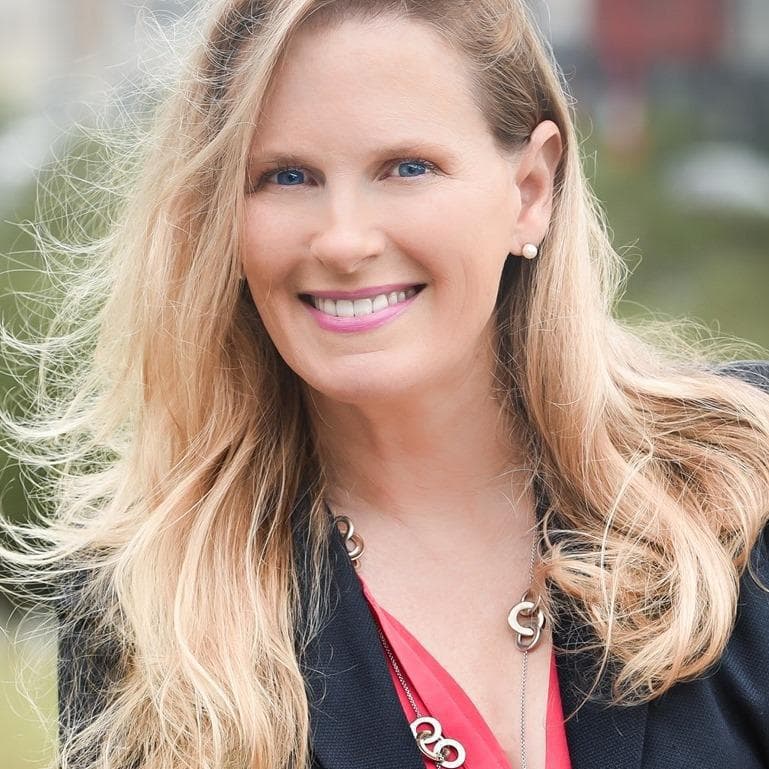
Marie Hurabiell
Marie Hurabiell is a multi-generation San Franciscan whose deep roots in the city have shaped her activism and civic leadership. Born and raised in San Francisco, Marie has spent decades engaging with local politics, law and community affairs, first as a practicing attorney and later as a community organizer and civic advocate. Throughout her career, Marie has emphasized government accountability, neighborhood empowerment and citizen-led solutions to longstanding challenges facing the city.
Marie is a doer. Marie is best known as the founder and Executive Director of ConnectedSF, a civic engagement organization. ConnectedSF grew out of her observation that there was a growing disconnect between the decisions being made at City Hall and the priorities of everyday San Franciscans, especially around issues like public safety, housing policy, government spending and other quality-of-life issues. By creating a centralized hub for civic participation and neighborhood coordination, she has worked to make engagement in local politics accessible, actionable and responsive to the real concerns of families and businesses.
Marie is a visionary. A key focus of Marie’s work has been articulating the concept of what some describe as city-caused problems: conditions that stem directly from policy choices, budget decisions or administrative actions by the city government that residents see as contributing to their deteriorating quality of life. This includes rising crime and public safety concerns, the city’s sprawling budget that appears misaligned with current demographic and economic realities and burdensome regulations that impact housing, transportation and neighborhood vibrancy. In her writing and public commentary, Marie has argued that many of these challenges are not inevitable but are instead the result of governance decisions that have not sufficiently centered the needs and voices of residents. She’s called for a recalibration of priorities, so that public servants work for the people rather than being isolated in bureaucratic silos.
Marie is a community leader. Under her leadership, ConnectedSF has built a coalition of more than 13,000 neighbors across all 11 supervisorial districts, empowering hyper-local neighborhood groups to tackle issues directly and collectively. These groups operate as grassroots forums where residents identify problems, mobilize around common goals and communicate directly with city officials. The result has been a more distributed model of civic activism, one that harnesses everyday experience rather than relying solely on top-down policymaking. ConnectedSF has supported community efforts on public safety initiatives, educational accountability and economic revitalization through events, campaigns, surveys and coordinated communications with local leaders.
Marie is a collaborator.
In total, Marie Hurabiell’s contributions reflect a vision of San Francisco, where informed residents, empowered neighborhoods and accountable institutions work together to build a more functional and equitable city. Through ConnectedSF, she championed civic engagement as the cornerstone of effective urban governance.
Marie is a MODERATE. Let’s send this homegrown, pragmatic, problem-solving fighter for San Francisco to Washington!
Source (https://www.connectedsf.com/ca-11-house-of-representatives-2026-june-endorsement)
San Francisco County Board of Supervisors - District 2
Lori Brooke
It is not an exaggeration to say that Lori Brooke has been working tirelessly on behalf of District 2 residents for 20-plus years. Her passion for helping San Franciscans is strong, and her connections with the community are deep. She is running as the neighborhood grassroots challenger, and her pitch is that District 2 needs an independent representative rooted in the district rather than another City Hall insider. Her north star is neighborhood quality of life, and she has consistently framed safe and clean streets as the foundation for everything else.
Lori strongly opposed Mayor Lurie’s Family Zoning Plan, which was approved by the Board of Supervisors (https://www.sfexaminer.com/news/urban-development/sf-family-zoning-plan-passes-upzoning-approved/article_3938b98d-df49-401f-b857-18e03c72c848.html) last December, though she doesn’t oppose building housing overall. Instead, she prioritizes neighborhood character and local control, favors building approved projects already in the pipeline and focuses on affordable housing. Lori strongly opposes the new Marina Safeway highrise project and broader upzoning tied to state mandates.
She is endorsed by respected moderates, like Michaela Alioto-Pier, as well as by the League of Pissed-Off Voters and the Working Families Party, universally known as a progressive, union-backed political party. Because Lori hasn’t held elected office, it’s an open question on how her progressive leanings on certain issues, not to mention her relationships with progressive leaders and groups, will factor into her decision-making if she is elected supervisor.
Source (https://www.connectedsf.com/d2-board-of-supervisors)
San Francisco County Board of Supervisors - District 4
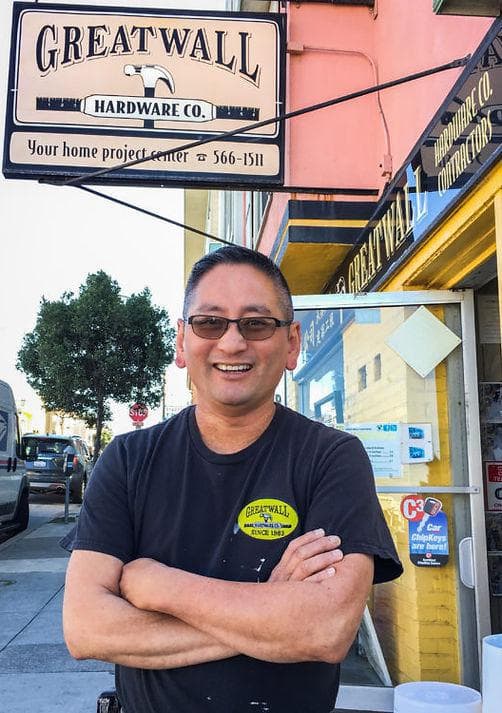
Albert Chow
Albert Chow is a long-time Sunset District resident and small business owner in San Francisco. He owns Great Wall Hardware on Taraval Street, a family-run store established in 1978 and has been active in the community for decades. Chow serves as president of People of Parkside Sunset (POPS), a neighborhood organization that hosts local events, such as movie nights and markets, and partners with residents and police on quality-of-life issues. Through POPS, he has emphasized community engagement and safety. His campaign highlights include a focus on safe streets, housing affordability and support for small businesses. If there is a candidate whose heart is in the right place, whose motives are pure and genuine, and who truly cares and understands his community, it’s Albert. Juggling the demands of City Hall as a small business owner, along with his strong commitment to family, makes us a little worried that he has bitten off more than he can chew. But Albert is a homegrown candidate who our members overwhelmingly selected as their number one pick for D4 Supervisor. We would love to see him representing his District at City Hall. Rank #1.
Source (https://www.connectedsf.com/d4-board-of-supervisors-2026-endorsement)
Alan Wong was appointed by Mayor Lurie last fall as the supervisor for District 4, following the recall of former supervisor Joel Engardio and the brief tenure of Beya Alcaraz. Wong is a lifelong resident of the Sunset District and a graduate of San Francisco public schools. Before his appointment, Wong served on the City College of San Francisco (CCSF) Board of Trustees, including two terms as board president, and worked as a legislative aide from 2019 to 2023 to longtime D4 supervisor Gordon Mar. While serving as CCSF Board President, the board resisted cost-cutting measures, favored union-aligned leadership choices and delayed and undermined financial reforms that could have helped stabilize the college’s finances. Alan is heavily backed and supported by a large number of unions, which means he will be beholden to a significant number of unions. While it doesn’t really make sense to us to vote for a guy who worked for the supervisor who D4 did not re-elect, he might be a marginally less progressive option than Natalie Gee. RANK #2
Source (https://www.connectedsf.com/d4-board-of-supervisors-2026-endorsement)
Natalie Gee is a progressive community organizer and was chief of staff to Supervisor Shaman Walton. That should tell you all you need to know about why we cannot support her for D4 supervisor. Her extremely progressive platform includes supporting unions, opposing recalls and establishing a public bank, just to name a few of her ideological priorities. If you thought those were ideal, how about these: other more pie-in-the-sky priorities are progressive tax measures targeting high earners.
Her claim to fame is her community “activism,” which in politics usually translates into an inability to govern due to adherence to ideology over pragmatism. The Board of Supervisors does not need more activists. It needs stalwart soles who can do the boring work of legislating on behalf of all of us. Gee can continue her brand of progressive activism as Shaman Walton’s Chief of Staff. DO NOT RANK
Source (https://www.connectedsf.com/d4-board-of-supervisors-2026-endorsement)
Natalie Gee
Albert Chow is a long-time Sunset District resident and small business owner in San Francisco. He owns Great Wall Hardware on Taraval Street, a family-run store established in 1978 and has been active in the community for decades. Chow serves as president of People of Parkside Sunset (POPS), a neighborhood organization that hosts local events, such as movie nights and markets, and partners with residents and police on quality-of-life issues. Through POPS, he has emphasized community engagement and safety. His campaign highlights include a focus on safe streets, housing affordability and support for small businesses. If there is a candidate whose heart is in the right place, whose motives are pure and genuine, and who truly cares and understands his community, it’s Albert. Juggling the demands of City Hall as a small business owner, along with his strong commitment to family, makes us a little worried that he has bitten off more than he can chew. But Albert is a homegrown candidate who our members overwhelmingly selected as their number one pick for D4 Supervisor. We would love to see him representing his District at City Hall. Rank #1.
Source (https://www.connectedsf.com/d4-board-of-supervisors-2026-endorsement)
Alan Wong was appointed by Mayor Lurie last fall as the supervisor for District 4, following the recall of former supervisor Joel Engardio and the brief tenure of Beya Alcaraz. Wong is a lifelong resident of the Sunset District and a graduate of San Francisco public schools. Before his appointment, Wong served on the City College of San Francisco (CCSF) Board of Trustees, including two terms as board president, and worked as a legislative aide from 2019 to 2023 to longtime D4 supervisor Gordon Mar. While serving as CCSF Board President, the board resisted cost-cutting measures, favored union-aligned leadership choices and delayed and undermined financial reforms that could have helped stabilize the college’s finances. Alan is heavily backed and supported by a large number of unions, which means he will be beholden to a significant number of unions. While it doesn’t really make sense to us to vote for a guy who worked for the supervisor who D4 did not re-elect, he might be a marginally less progressive option than Natalie Gee. RANK #2
Source (https://www.connectedsf.com/d4-board-of-supervisors-2026-endorsement)
Natalie Gee is a progressive community organizer and was chief of staff to Supervisor Shaman Walton. That should tell you all you need to know about why we cannot support her for D4 supervisor. Her extremely progressive platform includes supporting unions, opposing recalls and establishing a public bank, just to name a few of her ideological priorities. If you thought those were ideal, how about these: other more pie-in-the-sky priorities are progressive tax measures targeting high earners.
Her claim to fame is her community “activism,” which in politics usually translates into an inability to govern due to adherence to ideology over pragmatism. The Board of Supervisors does not need more activists. It needs stalwart soles who can do the boring work of legislating on behalf of all of us. Gee can continue her brand of progressive activism as Shaman Walton’s Chief of Staff. DO NOT RANK
Source (https://www.connectedsf.com/d4-board-of-supervisors-2026-endorsement)
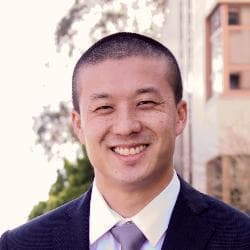
Alan Wong
Albert Chow is a long-time Sunset District resident and small business owner in San Francisco. He owns Great Wall Hardware on Taraval Street, a family-run store established in 1978 and has been active in the community for decades. Chow serves as president of People of Parkside Sunset (POPS), a neighborhood organization that hosts local events, such as movie nights and markets, and partners with residents and police on quality-of-life issues. Through POPS, he has emphasized community engagement and safety. His campaign highlights include a focus on safe streets, housing affordability and support for small businesses. If there is a candidate whose heart is in the right place, whose motives are pure and genuine, and who truly cares and understands his community, it’s Albert. Juggling the demands of City Hall as a small business owner, along with his strong commitment to family, makes us a little worried that he has bitten off more than he can chew. But Albert is a homegrown candidate who our members overwhelmingly selected as their number one pick for D4 Supervisor. We would love to see him representing his District at City Hall. Rank #1.
Source (https://www.connectedsf.com/d4-board-of-supervisors-2026-endorsement)
Alan Wong was appointed by Mayor Lurie last fall as the supervisor for District 4, following the recall of former supervisor Joel Engardio and the brief tenure of Beya Alcaraz. Wong is a lifelong resident of the Sunset District and a graduate of San Francisco public schools. Before his appointment, Wong served on the City College of San Francisco (CCSF) Board of Trustees, including two terms as board president, and worked as a legislative aide from 2019 to 2023 to longtime D4 supervisor Gordon Mar. While serving as CCSF Board President, the board resisted cost-cutting measures, favored union-aligned leadership choices and delayed and undermined financial reforms that could have helped stabilize the college’s finances. Alan is heavily backed and supported by a large number of unions, which means he will be beholden to a significant number of unions. While it doesn’t really make sense to us to vote for a guy who worked for the supervisor who D4 did not re-elect, he might be a marginally less progressive option than Natalie Gee. RANK #2
Source (https://www.connectedsf.com/d4-board-of-supervisors-2026-endorsement)
Natalie Gee is a progressive community organizer and was chief of staff to Supervisor Shaman Walton. That should tell you all you need to know about why we cannot support her for D4 supervisor. Her extremely progressive platform includes supporting unions, opposing recalls and establishing a public bank, just to name a few of her ideological priorities. If you thought those were ideal, how about these: other more pie-in-the-sky priorities are progressive tax measures targeting high earners.
Her claim to fame is her community “activism,” which in politics usually translates into an inability to govern due to adherence to ideology over pragmatism. The Board of Supervisors does not need more activists. It needs stalwart soles who can do the boring work of legislating on behalf of all of us. Gee can continue her brand of progressive activism as Shaman Walton’s Chief of Staff. DO NOT RANK
Source (https://www.connectedsf.com/d4-board-of-supervisors-2026-endorsement)
San Francisco Board of Education - At Large

Phillip Kim
Phil Kim is a unicorn in the often-ignored, routinely-used-as-a-political-launching-pad world of SF Education Board politics. He actually knows what he's doing! During his 12 years as an educator, with a Master's in Education Policy and currently pursuing a doctorate, he had hands-on experience running programs inside SFUSD itself before ever sitting on the Ed Board. He was appointed by former mayor London Breed, was unanimously elected board president by his colleagues and immediately got to work on the unglamorous but essential stuff, like dragging SFUSD's fiscal certification up from "negative" to "qualified." (Do we dare dream we might see “positive” one day?)
Under his watch, the board set operational standards for itself, adopted a new K-8 math curriculum, set measurable goals for 3rd grade literacy and 8th grade math proficiency and established real accountability metrics for the Superintendent for the first time in years. This is not a guy simply treating the School Board as a résumé line item on his way to something else. What a relief!
Source (https://www.connectedsf.com/board-of-education-seat)
Measure B: Lifetime Term Limits for Mayor and Members of the Board of Supervisors
Vote Yes
WHY YES ON PROP B?
For decades, San Francisco has operated under a political culture where long tenures translate into entrenched power. We believe experience matters, but we also believe permanent jobs for life do not. Prop B restores balance to our Board of Supervisors and Office of the Mayor by ensuring leadership remains dynamic, accountable, and responsive to the people, not to single-party political networks built over decades. And let’s be clear, San Francisco is a one-party town that concentrates this “network” into an insurmountable machine. Currently, the city charter limits these offices to two consecutive four-year terms, but allows officials to run again after a break from office. Prop B ballot would replace that with lifetime term limits, meaning no one could serve more than two four-year terms ineither position, regardless of breaks in service.
Prop B is compelling because it opens the door to new and younger candidates. San Francisco is a city defined by innovation, creativity, and generational change, yet our political pipeline can feel closed off to first-time candidates without institutional backing. When seats are perpetually occupied by career politicians rotating between offices, emerging leaders are discouraged from even trying. Lifetime limits create predictable openings and real competition, making it more likely that educators, small business owners, public safety professionals, and community advocates step forward.
We also know from firsthand experience that deadlines increase efficiency. Who knows how many more hours we would have spent watching clips of Jack Hughes scoring the “golden goal,” if we didn’t have a deadline for this voter guide breathing down our necks?
When elected officials know their time in office is limited, incentives change. The focus shifts from political longevity to policy results. Decision-making becomes more urgent, priorities become clearer, and the legacy is defined by accomplishment rather than incumbency. In a city facing urgent challenges like public safety, infrastructure reliability, fiscal discipline, housing production, and the drug and homelessness crises, we need leaders motivated by impact, not career preservation. Voters deserve elected leaders with vision, accountability, and energy, not uninterested career opportunists who phone it in.
Regular leadership change strengthens democracy by making the government more reflective of the city as it is now, not as it was 20 years ago.
San Francisco prides itself on leading the nation. Prop B is a practical reform that promotes generational renewal, sharper focus, and healthier civic competition. A vote for Prop B is a vote for fresh leadership, greater efficiency, and a City Hall that belongs to the future, not the past. Congress should take note! VOTE YES!
Source (https://www.connectedsf.com/prop-b-lifetime-term-limits)
Upcoming race
Vote No
This important ESER bond needs to be pulled and rewritten with a sole focus on a fully built-out Emergency Firefighting Water System (EFWS) serving the western and southern neighborhoods of the city and seismic rebuilds for firehouses. The $200M (40%) allocated to MUNI for rebuilding the Potrero Bus Yard must be pulled out. Then it needs to be put back on the ballot in November. Otherwise, this is just another MUNI bond and should be sold as such.
WHY NO ON PROP A?
Since 2010, San Francisco voters have approved three prior Emergency Firefighting and Earthquake Safety general obligation bonds intended to strengthen San Francisco’s disaster readiness.
The first, the 2010 ESER Bond, authorized approximately $412 million. Its stated focus was seismic upgrades to fire stations, improvements to the Auxiliary Water Supply System (AWSS), and initial planning for an Emergency Firefighting Water System (EFWS) to expand water access beyond downtown. Funding primarily went toward fire station retrofits and enhancements to the existing high-pressure system serving the northeast quadrant of the city. Not one pipe was laid in the 60% of the unprotected parts of the city for EFWS.
The second, the 2014 ESER Bond, authorized about $400 million. Allocations included additional fire station seismic work, street cistern construction, and early-phase EFWS design. While planning and limited components moved forward, a citywide EFWS buildout was still not completed.
The third, the 2020 ESER Bond, authorized roughly $628.5 million. That measure included funding for fire station rebuilds, continued AWSS improvements, and further EFWS planning and segment work in the western neighborhoods. Despite repeated commitments across all three bonds, a fully realized, citywide EFWS network, particularly serving outer neighborhoods vulnerable to post-earthquake fires, has not been delivered at scale. So, to recap, since the first ESER authorization in 2010, no comprehensive, continuous EFWS pipeline network serving the west side has been completed, despite voters voting for that very line item.
This ESER bond measure totals approximately $535 million and continues the tradition of using an important infrastructure bond for post-earthquake readiness to fund projects other than the stated purpose of the bond; in this case, to help MUNI rebuild a bus yard. We will take a hard pass on this and hope it returns in a purer form on the November ballot. Those of us who live on the westside and in the southern parts of the city are counting on our government to build a functional EFWS. This should have happened in 2010, and while it’s not an emergency now, it never is until it is. Don’t be fooled again. Vote NO on this measure, and let’s demand its rewrite and reappearance in November.
Source (https://www.connectedsf.com/prop-a-earthquake-safety-emergency-response-eser-general-obligation-bond)
Measure C: Decreases to Business Taxes
Vote No
WHY NO ON PROP C?
Let’s start with the obvious: “Decreases to Business Taxes” is not as simple as its name suggests. “Decreases” sounds nice. The reality? It’s more of a tax re-mix than a tax cut.
Prop C tweaks the system voters just approved under Proposition M (2024), which was supposed to stabilize San Francisco’s business taxes after years of economic whiplash. Instead of blowing that up completely, like Prop D below, Prop C nudges it, lowering some taxes while quietly dialing the CEO pay tax back up from where Prop M left it.
Prop C is a NO vote for us because…
This so-called “business-friendly” measure still raises the CEO Ratio tax compared to today’s baseline.
Despite the recent vibe change, San Francisco is dealing with empty office towers, a stubbornly slow recovery, and a tax base that’s…let’s just say, “fragile.” Against that backdrop, Prop C reads less like a grand solution and more like a calculated compromise with tax-happy San Francisco voters. In short: if you’re looking for a meaningful decrease in business taxes, Prop C isn’t it. It’s a muddled middle path. Whether that’s pragmatic or ill-advised depends on your perspective. Ours is…VOTE NO.
Source (https://www.connectedsf.com/prop-c-decreases-to-business-taxes)
Measure D: Increases to Business Tax Based on Comparison of Top Executive's Pay to Employee's Pay
Vote No
Bottom Line: Prop D will significantly increase San Francisco’s “Top Executive Pay Tax” beginning in 2027, changes how the pay ratio is calculated (to include worldwide employees, not just SF employees, which means more companies will be paying the tax), and makes it much harder for the Board of Supervisors to decrease it later. At a time when big companies are still evaluating long-term office commitments, adding volatility and locking in high tax rates without flexibility is risky and unwise. VOTE NO.
WHY NO ON PROP D?
The Progressive camp and the measure authors from SEIU are not at all happy that Prop M blunted the corporate fleecing that Prop L (2020) provided, and they have hatched this new plan to try and compel companies to leave San Francisco.
Worse yet, Prop D would mean a significant increase in the Overpaid CEO tax, far beyond what was approved in 2020 and then subsequently lowered by voters in 2024.
Prop D is a no-brainer NO vote because:
While it may be fashionable to say that big companies need to “pay their fair share,” the reality is that San Francisco’s overconcentration on a small tax base of large companies increases fiscal instability. Furthermore, national and international companies are highly mobile and can easily move offices and headquarters out of the area. We cannot afford to give crucial tax-revenue-generating companies further reason to avoid doing business in San Francisco.
Supporters of this measure claim that a "NO" vote on Prop D will “protect the city’s wealthiest people” and that you will be choosing “greed” over “care.” Prop D does not in any way impact CEO pay, and the tax money raised would not go specifically to healthcare or any other program. Rather, it would go to the general fund, and we have no idea where that would end up.
Cooler heads must prevail. “Let’s Go, San Francisco!” is a meaningless phrase if voters don’t make decisions that actually allow San Francisco’s businesses to prosper. And, yes, that means even the big companies that pay their CEOs well.
Final note: The ease with which tax-related measures can be put on the ballot creates an unstable tax and regulatory environment for businesses and residents alike. Mayor Lurie is looking to change that (https://www.sfexaminer.com/lurie-will-go-to-voters-in-effort-to-remake-city-hall/article_fb2da73b-ff52-4f7d-919a-35d64ae8c047.html) in November.
Source (https://www.connectedsf.com/ceo-tax)

