
California General Election
California Controller
California is a financial mess. In December, the state auditor released (https://www.auditor.ca.gov/reports/2025-601/) his “Updated Assessment of Issues and Agencies That Pose a High Risk to the State,” reporting that “Late Financial Reporting Remains a High-Risk Issue.”
The people who are supposed to be watching the risks are themselves a risk. “Financial Reporting” has been on the high-risk list since 2020.
State Controller Malia Cohen, seeking a second term in the office to which she was elected in 2022, told us that there has been “significant progress” to improve reporting and to file the state’s chronically late Annual Comprehensive Financial Reports closer to their deadlines.
“I’ve learned it takes a long time to get things done,” she told our editorial board, explaining that people “blow through deadlines” and departments don’t always have employees with the right skill sets to do the work. She similarly expressed concern about inadequate internal controls across state government.
But asked how to fix these problems, whether it would require legislation or money, or if it was institutional inertia, Cohen basically said she didn’t know.
The controller is the state’s chief fiscal officer, accountant and bookkeeper, and sits on dozens of boards including those of California’s largest employee pension funds. It’s a financial job. Malia Cohen, however, is not a financial professional. Her expertise is in politics. As the top official overseeing roughly 1,600 employees, she is heavily reliant on the judgment and performance of others.
As an example of how that can go wrong, the state auditor found that the “controller made material errors” totaling $11 billion in the reconciliation of education funding in the fiscal year 2022-23 Annual Comprehensive Financial Report, as well as $6.1 billion in “material errors” the following year.
In November, California voters have a better option — a candidate with the relevant expertise and independence to cut through the inertia and restore accountability.
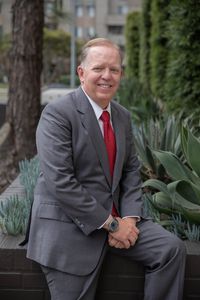
Herb Morgan, who grew up in Westminster and Oceanside and lives in San Diego, spent 40 years working in finance. He founded an investment firm, grew it to manage $1.5 billion in assets and later sold it to a large Wall Street company, where he served as their chief investment officer for about a decade. He retired earlier this year.
Morgan also has some experience with the challenges of public finance, having served on the board of the San Diego City Employees’ Retirement System. He was appointed by Mayor Jerry Sanders in 2009 to help get the fund back on track after serious problems in the early 2000s. Morgan was twice elected board chair by his fellow trustees.
As a candidate for controller, Morgan has demonstrated that he can provide what he calls “radical transparency,” creating a website (https://californiaradicaltransparency.com/fiscal-data-warehouse/) that pulls California’s current spending data out of the balky FI$Cal financial system and makes it accessible to the public.
Morgan also created a campaign finance tracker (https://www.herbmorganonchain.com/) that shows every donation to his campaign, with verified transactions “recorded on the blockchain for immutable transparency.”
It’s a reminder that technology has provided tools for financial oversight that were not available even ten years ago. Much can be done to bring transparency and accountability to California’s finances, if the official in charge is knowledgeable and experienced. Herb Morgan is both.
Morgan told the editorial board the controller has the authority to mandate accounting methodology and reporting techniques. He said he could use the powers of the office to audit any entity that touches state funds. Homelessness spending and high-speed rail are two obvious candidates for an auditor’s scrutiny.
California’s annual budget has soared above $300 billion. The Legislative Analyst’s Office has warned of structural deficits as spending growth outpaces revenue growth. State taxes are among the highest in the nation, waste and fraud are rampant, and Sacramento’s answer has been to tap the rainy day reserves and use “budget borrowing” to kick the can down the road.
If any state ever needed a financial watchdog, it’s this one.
Herb Morgan is a rare candidate with experience and ideas perfectly matched to the office he’s seeking, at a time when California is especially in need of his skills. He deserves your vote and we endorse him for controller.
Source (https://www.dailynews.com/2026/09/06/endorsement-herb-morgan-for-state-controller/)
California Insurance Commissioner
California voters are facing a number of significant races in the general election ranging from the high-profile contest to fill an open governor’s seat to an initiative that could limit local tax increases. Yet the race for the little-followed position of insurance commissioner could have the most reverberations. Quite simply, the insurance industry (https://www.wsj.com/articles/insurance-companies-are-quietly-fleeing-california-proposition-103-natural-disaster-state-farm-market-competition-ricardo-lara-commissioner-db0af00) — the lifeblood of the state’s real estate market — is facing an existential threat.
We don’t issue such warnings lightly. As many beleaguered homeowners know, California’s property insurance market (https://judiciary.house.gov/committee-activity/hearings/california-fires-and-consequences-overregulation) has been in a free fall since 2023, after State Farm — the dominant home-insurance underwriter — stopped writing new policies. Other companies pulled back. The proximate cause: Costly wildfires threatened their financial stability. The fundamental cause: California’s system of insurance price controls had impeded their ability to adjust rates to meet risk.
So insurers started pulling back, leaving record numbers of Californians scrambling for insurance, underinsured or dependent on the state-created FAIR (Fair Access to Insurance Requirements) Plan (https://www.cbsnews.com/sanfrancisco/news/california-fair-plan-insurers-incentivized-policies-last-resort/). As a result, that safety-net insurer approached the financial brink. Although slow to react, Commissioner Ricardo Lara created the Sustainable Insurance Strategy — a series of significant reforms that have stabilized the market and bolstered the FAIR Plan. Insurance is still too expensive, but California’s market is recovering.
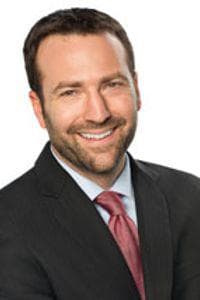
That brings us to the current election. It pits state Sen. Ben Allen (https://www.benallenca.com/), D-Santa Monica, against Jane Kim, the former San Francisco supervisor and one-time state director of the far-left Working Families Party. She received the most votes in the primary in a crowded field. We had endorsed Patrick Wolff, an insurance expert, but were impressed with Allen, also. He brings a wealth of legislative experience to the table, and is thoughtful, detail-oriented and not particularly ideological — important traits for an office that oversees a large humdrum bureaucracy.
Most important: Allen is committed to continuing the Lara-era reforms (https://www.insurance.ca.gov/01-consumers/180-climate-change/sustainable-insurance-strategy.Cfm) that are steadily restoring the health of the property insurance industry. He’s sure to back some initiatives regarding, say, climate change, that give us heartburn, but he understands insurance markets and is committed to generating competition and staying the reform course. That is the key to restoring the industry’s health and assuring that consumers can find affordable policies.
Enter Kim. She has no real insurance background. She is an ideologue who promises to socialize a large portion of the home-insurance industry. Not only will that put taxpayers on the hook for liabilities now assumed by private companies, it will turn over matters to government agencies. We’re not surmising here — Kim proudly boasts (https://jacobin.com/2026/02/natural-disaster-insurance-california-wildfires) about her plans. Anyone who has watched California’s government operate over the last few decades knows that any such “disaster insurance for all” system will be bureaucratic, wasteful and plagued with scandal.
As we argued in our primary editorial (https://www.ocregister.com/2026/04/26/endorsement-patrick-wolff-for-state-insurance-commissioner/), “She wants a publicly run single-payer system, which would destroy California’s market. Even if she’s unable to implement these long-timeframe proposals, she would trigger a further exodus of insurers with her trial-lawyer/consumer-activist approach to insurance regulation.” If you think disaster insurance is problematic now, just wait until government runs it.
We understand homeowners’ frustration with insurance companies, but the answer is not to turn the system over to bureaucrats, activists and unions. Your ability to find affordable, quality insurance may depend on this election outcome.
We strongly urge a vote for Ben Allen.
Source (https://www.dailynews.com/2026/08/16/endorsement-ben-allen-for-insurance-commissioner/)
California Superintendent of Public Instruction
While we don't agree with Shaw on everything, given the choices at hand, she's the only one who will say what needs to be said
California State Board of Equalization - District 3
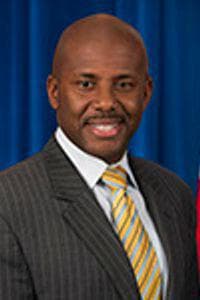
District 3 covers Los Angeles County. Both candidates in this race are Democrats, with self-described labor organizer Samuel Sukaton facing off against Assemblyman Mike Gipson.
Samuel Sukaton is identified on the ballot as a labor union organizer. Repeated attempts over a month to interview him were unsuccessful. He is the only BOE candidate in the region who favors gutting Proposition 13, the 1978 property tax limitation initiative, “to raise new revenue with things like split-roll,” meaning much higher taxes for business properties. He also has served (https://www.californiadsa.org/voterguide) in leadership for the Democratic Socialists of America-LA.
Gipson (https://ballotpedia.org/Mike_Gipson) has served in the Assembly since 2014 and before that was (https://lasentinel.net/mike-gipson-has-his-eye-on-the-64th.html) chief of staff for then-BOE Chairman Jerome Horton. In our interview, he said the 2017 reform “disenfranchised” taxpayers, lamenting that now a “mom-and-pop business has to pay court costs, pay a lawyer to litigate it in superior court and wait months and months to be heard.”
For the board as it currently is, he would make its website (https://www.boe.ca.gov/) more accessible in different languages and easier to navigate.
As a legislator, Gipson was the principal coauthor of Senate Constitutional Amendment 4 (https://legiscan.com/CA/text/SCA4/id/2785836) in 2023, which was sponsored by the Howard Jarvis Taxpayers Association. It failed in committee, but would have restored parent-child home transfers without reassessment currently limited by Proposition 19.
This is an easy call. Gipson understands the importance of Prop. 13 and the office he’s running for. His opponent is a far-left activist who ducks the press.
Los Angeles City Attorney
The job of Los Angeles City Attorney is a complicated balancing act that requires good judgment, and, necessarily, the kind of experience that teaches good judgment.
It is not the best place to try out trendy activist ideas that will deliver negative consequences for jobs and public safety in Los Angeles.
We endorsed incumbent City Attorney Hydee Feldstein Soto for reelection, but the voters disagreed, and two other candidates will face each other in the November run-off.
Marissa Roy (https://www.marissaroy.com/), a member (https://shakeup-la.com/our-candidates) of the Los Angeles chapter of the Democratic Socialists of America, finished first in the primary with 43.1% of the vote. She told us her priorities would be suing businesses over what she says is $2.5 billion in wage theft, and suing landlords, presumably to stop them from evicting tenants who don’t pay the rent or violate their leases in other ways.
But Roy’s website gives away the game. She calls her issues page “The People’s Platform.” In the first section, “Protecting Workers’ Rights,” she declares, “Companies are using increased automation to evade regulations and eliminate jobs.” That’s not illegal, and it’s a troubling sign that a city attorney candidate can’t get past paragraph one in her platform before she’s hinting at using the considerable powers of the office to put a thumb on the scale for what should be a collective bargaining issue, not a law enforcement matter.
When it comes to public safety, Roy states confidently that “too often, our approach to public safety doesn’t actually keep us safe,” then defaults to the dated talking point that the “root causes of crime” must be addressed instead of giving in to a “cycle of criminalization.” That’s code for more social program spending and fewer arrests, and since there has never been enough money for enough social programs to solve the “root causes of crime,” the residents of the city are left with the crimes. Businesses with jobs might offer a better life to young people, but don’t expect businesses to locate or grow in Los Angeles if they’re only going to be demonized and sued in the name of “The People’s Platform.”
Fortunately, the voters of Los Angeles have an excellent option for the job of city attorney in Deputy District Attorney John McKinney (https://mckinney4la.com/).
McKinney, a lifelong Democrat, has the endorsements of former Los Angeles County District Attorneys Jackie Lacey, a Democrat, and Steve Cooley, a Republican. He worked for both of them, having joined the District Attorney’s office in 1997 after graduating from UCLA School of Law. McKinney also has the endorsement of District Attorney Nathan Hochman, the Los Angeles Police Protective League, and the relatively sensible, non-socialist members of the L.A. City Council – Traci Park, Monica Rodriguez, John Lee and Tim McOsker.
McKinney’s campaign is focused on public safety. In his career as a prosecutor, he has been assigned to the Special Victims Unit, Hardcore Gang Prosecutions and Major Crimes. When he entered the race near the end of March, he said his key priorities would be public safety, neighborhood protection, support for law enforcement and restoring confidence in the criminal justice system.
The city attorney does not prosecute felonies, but is responsible for prosecuting misdemeanors. This includes the many quality-of-life crimes that concern Los Angeles residents. McKinney told our editorial board that he would “enforce 41.18,” the city’s ordinance outlawing homeless encampments in sensitive locations. At the same time, he said he would pursue diversion, not incarceration, in enforcing the law.
John McKinney has the judgment and experience Los Angeles needs in its city attorney, and he has our endorsement.
Source (https://www.dailynews.com/2026/08/31/endorsement-john-mckinney-for-los-angeles-city-attorney/)
Proposition 1: California Veteran and Housing Assistance Programs Bond Measure
Is the answer to California’s housing crisis more bonds and more debt? Of course not.
Yet that’s what’s being pitched with Proposition 1.
Placed on the ballot by the California Legislature via Senate Bill 417 (https://leginfo.legislature.ca.gov/faces/billAnalysisClient.xhtml?bill_id=202520260SB417), Prop. 1 asks voters to approve (https://lao.ca.gov/BallotAnalysis/Proposition?number=1&year=2026) $11.25 billion in bonds to help finance various programs, including a $500 million down payment assistance program.
One bond – $1.25 billion – will go toward the Department of Veteran Affairs (CalVet) Home Loan Program. Participants in the program will repay this portion of Prop. 1.
The other $10 billion bond will be paid out of the state’s General Fund, and will go toward various programs. Most of it will go toward subsidized housing for low-income residents, while other funds will go toward programs aimed at student housing, tribes and farmworkers.
According to the Legislative Analyst’s Office, Prop. 1 “would provide subsidies for up to 40,000 multifamily rental units, as well as about 2,500 units for farmworkers and about 1,200 beds for university students.”
Proponents say Prop. 1 is worth the cost given the state’s high rate of homelessness and the high proportion of renters who struggle with high housing costs. In backing the measure, California YIMBY argues that, “Publicly-funded housing subsidies for low-income Californians who cannot afford market-rate rents are a good thing, and they should be more widely available.”
Yeah, no.
Taxpayer-subsidized housing in California is incredibly expensive to build. As a RAND Corp. report (https://backtobasicssj.com/wp-content/uploads/2025/04/RAND_RRA3743-1.pdf) from last year points out, publicly-subsidized “affordable” housing in California costs 1.5 times that of market rate housing “and more than four times the cost of market-rate housing in Texas.”
There are myriad reasons for this, of course. As much progress as California has made in loosening zoning laws, the state’s land-use policies remain restrictive. Permitting processes in major cities are often incredibly slow (https://x.com/esoltas/status/2098162675989565925/photo/1). Reprieves from the California Environmental Quality Act always come with costly strings attached, including labor mandates.
Throwing more money into housing that’s slow and expensive to build simply won’t accomplish very much, because it can’t.
California YIMBY, to its credit, also points out some of the less desirable features of the measure. The down payment assistance program, for example, might be nice for those who benefit from it, but given the low supply of housing, it could end up contributing to higher home prices.
Then there’s the total bill for all of this. The $10 billion general obligation bond will, after interest, cost far more than that and further crowd-out other spending in the state budget. According to the LAO, the state will be spending $500 million to $600 million a year for 25 years to pay off the bond.
This, in turn, will only put further pressure on the perpetually precarious state budget and increase the risk of the Legislature approving or seeking new and higher taxes. This is no idle threat considering state lawmakers contemplated hundreds of billions of dollars (https://www.caltax.org/foundation/reports/20260611_Tax_and_Fee_Report.pdf) in new taxes this legislative session.
Eight years ago, in opposing the very similar Proposition 1 in 2018, we wrote (https://www.dailynews.com/2018/09/18/proposition-1-is-not-the-answer-to-our-housing-crisis-vote-no/), “If California’s leaders are serious about making California a more affordable place to live, they should concentrate their efforts on curtailing onerous regulations and restrictive land-use policies and making it easier for homebuilders to build. And if they insist on subsidizing housing, they should do so directly, rather than wasting taxpayer money on interest payments.”
We stand by that, though we’d emphasize the need for California to stop fiddling and burdening reforms with mandates. There are those who argue California can both subsidize housing and loosen regulations, but the reality that we’re still having this discussion underscores that state and local leaders are dragging their feet and not deregulating fast enough.
California needs more housing, yes, but it doesn’t need Prop. 1.
Prop. 1 squanders billions into expensive housing and other gimmicks to buy political support.
Vote no and demand better housing policies.
Proposition 3: California Renew State Income Tax Increase for Education Funding Initiative
Temporary should mean temporary. But for the government, temporary often means forever.
That’s what’s happening with Proposition 3 on the Nov. 3 ballot, titled: “Provides Permanent Funding for Schools and Healthcare by Extending Existing Tax on High Incomes,” which, as the name suggests, seeks to lock in the state’s high income tax rates forever.
The story goes back to 2012, with Proposition 30, which imposed both a statewide sales tax increase through 2016 and an increase to top income tax rates through 2018.
Leading the push for Prop. 30 was Gov. Jerry Brown, who vowed it was only a temporary measure to help the state ride out tough budget times in the years after the Great Recession and ensure the state’s schools were reliably funded. In fact, Prop. 30 was titled, “Temporary Taxes to Fund Education.” Taken together with other voter-approved income taxes, this pushed top income tax rates to 13.3%, the highest in the nation according to the Tax Foundation, with Hawaii the runner-up at 11%.
It wasn’t long before the state’s public employee unions pounced to extend the “temporarily” increased top income tax rates over the objections of even Gov. Brown. In 2016, voters approved the extension with Proposition 55, with the taxes set to run through 2030 and expiring in 2031. As this editorial board warned at the time in opposing Prop. 55, “California will not be able to tax its way to prosperity, and imposing more taxes, particularly on those most capable of making investments here (and most capable of leaving or shifting their investments to more business-friendly states) will only reduce job opportunities and suppress economic growth.”
The argument in favor of Prop. 3 seen by voters argues that allowing Prop. 55 to expire “would give millionaires and billionaires a massive tax cut at the expense of our classrooms, clinics and communities.” But that assumes the wealthy producers will stay here, instead of getting an instant tax cut by moving to Texas or elsewhere, especially when considered in an environment in which wealth taxes are seriously being talked about.
Indeed, research published by the American Economic Association in 2024 by Joshua Rauh and Ryan J. Shyu found that the Prop. 30 tax hikes prompted many high-income earners to either leave California or lower their taxable income. Such “responses eroded 45.2 percent of state windfall tax revenues within the first year and 60.9 percent within 2 years, driven largely by the intensive margin,” Rauh and Shyu reported.
Beyond the perils of maintaining such a high tax environment, the reality is that high taxes have primarily served to paper over the fundamental budget problems of the state and the education system. As Rauh recently noted, “In California, over the 9 most recent years of data, contributions to pensions for K-12 nearly doubled as a share of educational budgets, and consumed 44% of the increase in school budgets. Prop 30/55 looks more like a tax to fund pensions than a tax to fund education.”
That’s the cold, hard reality behind any public proclamation that higher taxes are needed to help students.
Also, to reiterate, the existing Prop. 55 tax rates run through 2030, expiring in 2031. That gives Californians plenty of time, including election cycles in 2028 and 2030, to decide whether the state truly needs another extension of our sky-high income tax rates. There’s no urgent need for an extension in 2026, let alone to make the “temporary” tax hikes permanent.
Robbing future voters of their decision-making because the California Teachers Association wants to secure a revenue stream years ahead of time is unjustified.
Vote no on Prop. 3.
Proposition 37: California Second Mortgage Homebuyer Program and Revenue Bond Initiative
Proposition 37 on the November ballot is a peculiar mix of philanthropy, tort reform, housing construction, worker protection and Wall Street bond underwriting fees. Presented to voters as a solution to the lack of affordable homes for willing buyers, Prop. 37 aims to encourage developers to build “middle-class” housing and help “middle-class” families buy them without taxpayer assistance.
For builders, the program offers some protection from construction defect litigation and high attorney fees if they agree to be “qualified builders” (accepting liability for labor violations by contractors and subcontractors) and build “qualified new homes” (new construction or conversion with a price cap on each unit that does not exceed 125% of the conforming loan limit for that county, approximately $1 million to $1.5 million).
For buyers, the program offers fixed-rate second mortgages for 17% of the purchase price, no need for private mortgage insurance (PMI), and alternative “cash-flow underwriting” for buyers who otherwise might not qualify for a second mortgage. Borrowers are required to qualify for a first mortgage, and they must put down 3% of the purchase price from their own funds. To be eligible, borrowers must be California residents for at least one year and have a household income no higher than 200% of the area median income, adjusted for family size.
The program is financed with $25 billion in revenue bonds, issued by the state but repaid by adding the principal, interest and program administration costs to the payments made by the borrowers. Taxpayers have no direct risk.
The deceptive part of Proposition 37 is the representation, as stated in the ballot argument in favor of the measure, that “consumer benefits include below-market, fixed-rate loans.” Nothing in the measure guarantees that the second mortgages offered in the program will be less expensive for borrowers than loans available from private lenders.
The contention that the cost of the loans will be “below-market” rests on the assumption that foundations and non-profits will be willing to buy the bonds at a below-market interest rate of 3%. These are revenue bonds, and the interest is not tax-free. In addition, they are not without risk. In the event of foreclosure, these second mortgages sit behind the first mortgages, with no back-up or guarantee from taxpayers.
That’s the part of the program that depends on philanthropy. The idea is that tax-exempt organizations will buy these bonds out of the goodness of their hearts and forgo the higher interest rates available from other bonds they could buy instead.
If that doesn’t happen, the California Housing Finance Agency will sell the bonds in the market and pay market interest rates, potentially making the Prop. 37 second mortgage loans even more expensive for borrowers than loans offered by commercial lenders who don’t have to recoup the cost of administering this program.
Any developer can build price-capped “qualified new homes” eligible for the down payment assistance loans, but only “qualified builders” who accept the labor rules get the program’s protection from litigation and attorney fees. They lose the protection for an entire building, proponent Bob Hertzberg told our editorial board, if even one unit in it sells for above the capped price.
Home buyers should be aware that if a house or condominium sells for less than its fair market value, the county tax assessor will assess the property based on its fair market value, not on its purchase price.
Proposition 37 attempts to be a path through California’s minefield of regulations and liability in the housing sector, but it’s relying on the hope that non-profits will subsidize second mortgages so income-limited families who don’t have the money for a down payment can have two mortgage payments, not to mention the cost of homeowners insurance, HOA fees, property taxes and utility bills.
It sounds to us like it won’t have a good outcome. Vote no on Proposition 37.
Proposition 40: California One-Time Wealth Tax for State-Funded Healthcare, Education, and Food Assistance Programs Initiative
Taxation is theft, libertarian thinkers have long asserted, and Proposition 40 on the November ballot contains nothing that proves them wrong.
The measure known as the Billionaire Tax Act would amend the state constitution to override existing limits on taxing and spending in order to make possible a one-time, 5% tax on the wealth of Californians with a net worth of more than $1 billion.
The proceeds from the tax would be directed into a special fund, and 90% of the revenue would have to be spent on health care services.
Unsurprisingly, the backer of this measure is a union of health care workers who provide those services.
The Service Employees International Union-United Healthcare Workers West (SEIU-UHW) has a long history of filing initiatives as bargaining chips for negotiations to advance the interests of the union.
This includes initiatives to limit the pay of hospital executives, cap prices at clinics, and tax a hospital in the L.A. County city of Lynwood. Another such measure from the union targeting community health clinics it wants to unionize, Proposition 44, is also on the ballot this November.
Despite spending more than $40 million on such campaigns through 2020, there were “no wins on the ballot,” CalMatters observed, though union president Dave Regan said the efforts made progress in other ways as he worked to expand membership in his union.
If the Billionaire Tax Act was intended as a bargaining chip to be withdrawn later, things didn’t work out as planned. It’s on the ballot and it might pass, doing serious damage to California’s budget, economy and job creation for years to come.
SEIU-UHW says the tax will bring in $100 billion to fill the hole the union believes the federal government has created with “cuts” to health care funding. However, economists at the Stanford University-based Hoover Institution caution that after accounting for billionaires who have already left and the long-term repercussions of more of them leaving, Prop. 40’s one-time wealth tax would not only collect less than the $100 billion hoped for, but in the long-run would reduce tax revenues as billionaire investors take their money elsewhere.
Prop. 40’s supporters say these warnings are mere propaganda. But consider the experience of other countries that have attempted wealth taxes. Consider a 2018 report (https://www.oecd.org/en/publications/the-role-and-design-of-net-wealth-taxes-in-the-oecd_9789264290303-en.html) from the Organisation for Economic Co-operation and Development, a multinational organization representing 38 developed nations. The OECD notes that while 12 OECD member countries had wealth taxes on the books in 1990, by 2017 that number plummeted to just four. Revenues from net wealth taxes, it turned out, “have also, with a few exceptions, been very low.”
Consider also the message that passage of Prop. 40 would send to not only current but future entrepreneurs and innovators. Allowing a cynical union to pilfer the wealth of California’s most successful entrepreneurs would have a chilling effect on investment. California may have nice weather, but Prop. 40 risks making the tax and business climate even less hospitable.
Another concern is the inevitable demand for more. The money from the one-time tax will run out within five years. Proposition 40 empowers the Legislature to change the Billionaire Tax Act with a two-thirds vote in each house. Beyond that, the Legislature could enact a much broader wealth tax once the mechanism for collecting it is established.
Regardless of where one sits on the political spectrum, there’s very little to like about this measure and plenty to worry about. It’s an aggressive money grab that could sink California’s progressive budget. It pursues short-term aims despite the long-term consequences. And it comes from the same obnoxious union that repeatedly attacked dialysis clinics and is now threatening community health clinics with closure if Prop. 44 passes.
Proposition 40 is a reckless tax proposed by a special interest group that wants to obtain funding to benefit its members. Vote no.
Source (https://www.dailynews.com/2026/09/13/endorsement-no-on-proposition-40s-reckless-wealth-tax/)
Proposition 41: California Prohibit Excluding New State Taxes from Spending Limit and Require Special Tax Audits Initiative
The most hotly debated initiative on the November ballot is Proposition 40, which would impose a 5% tax on the wealth of California billionaires. As this Editorial Board opined (https://www.ocregister.com/2026/09/13/endorsement-no-on-proposition-40s-reckless-wealth-tax/) in our opposition, the union-created Billionaire Tax Act would send a dangerous message to current and future entrepreneurs, and “have a chilling effect on investment.”
But two closely related measures, Propositions 41 and 42 (https://www.bakersfield.com/opinion/our-view/our-view-vote-no-on-propositions-40-41-42-tax-propositions-hurt-state-californians/article_1c8492b8-5fb9-4897-9f1c-c9ba56460e0d.amp.html), have received much less attention — partly because they’re so complicated. By adding related measures to the ballot, opponents of Prop. 40 are hoping that voters approve one of these alternatives that will derail Prop. 40. Because these two measures have elements that contradict Prop. 40, the one that gets the highest vote totals (if voters OK them all) would go into effect.
Adding similar-sounding measures also muddies the waters, thus increasing the likelihood that confused voters vote “no” on all of them — thus accomplishing the main goal of stopping the billionaires’ tax. But our goal isn’t to map out political strategies (https://www.pbs.org/wgbh/americanexperience/features/nash-game/). It’s a worthy effort to try to stop a disastrous new tax scheme.
Besides their intended purpose of blocking Prop. 40, the measures could protect taxpayers for years to come.
Specifically, Prop. 41 would require one-time audits of programs that any proposed special taxes would fund. Those audits, which must be completed before the initiative appears on the ballot, would be required to identify ways that such programs could cut annual costs by 10%, per an analysis (https://lao.ca.gov/BallotAnalysis/Proposition?number=41&year=2026) from the Legislative Analyst’s Office.
While Prop. 40 exempts itself from state spending limits, Prop. 41 also requires new special-tax revenues to count toward the Gann Limit (https://www.sheehystrategygroup.com/news/2026/3/9/californias-state-appropriations-limit-gann-limit) — the 1979 constitutional amendment that caps the revenue the state can spend each year. The state has passed a number of workarounds over the years, but applying new revenues to this formula would potentially require the return of certain additional tax revenues to taxpayers (https://www.yesonprop41.org/about-prop41) and the earmarking of revenues to infrastructure.
Prop. 42 is more straightforward. Per the LAO (https://lao.ca.gov/BallotAnalysis/Proposition?number=42&year=2026), the initiative prohibits “new taxes on the ownership of financial assets or other personal property.” California doesn’t currently tax the ownership of financial assets and only taxes personal property in a limited way (e.g., vehicle license fees), but the measure’s passage “could make it somewhat harder for the state to raise taxes.” It also limits imposition of retroactive taxes.
So would the Editorial Board support these measures even if they were standalone initiatives? The answers are unequivocal: Yes and yes.
Regarding Prop. 41 (https://calmatters.org/california-voter-guide-2026/proposition-41-tax-audits/), California could use better audits of spending programs. It’s a good idea to identify ways to trim existing programs before shoveling more money their way. It is taxpayers’ money, after all. Requiring audits after election officials have collected only 25% of qualifying signatures imposes a relatively costly burden, but those expenses are a rounding error for any major program. We also believe the state should better live up to the terms of the Gann Limit.
Regarding Prop. 42 (https://yesonprop42.org/?&utm_medium=paid-search&utm_content=A18&utm_campaign=YesOn42&gad_source=1&gad_campaignid=24250385746&gbraid=0AAAABEi2smx27CdnofkbhPlt_FqIHXDrD&gclid=CjwKCAjwq8PVBhAKEiwA2i3SHUyIfjJPNFkY5WqUynwZ9APOIPtTZDTa7v5_wEBmvD8nV21v3IkUbhoCCZ8QAvD_BwE), we endorse its efforts to limit unreasonable future tax increases. Going back and raising taxes on past earnings (as Prop. 40 does) before the new law was passed is unseemly. Opponents complain that it ties the hands of future Legislatures, but we’re totally fine with putting certain types of assets outside the revenuers’ grasp.
Vote yes on Propositions 41 and 42.
Proposition 42: California Prohibit New Taxes on Retirement Holdings, Personal Assets, and Savings and Limit Retroactive Taxes Initiative
The most hotly debated initiative on the November ballot is Proposition 40, which would impose a 5% tax on the wealth of California billionaires. As this Editorial Board opined (https://www.ocregister.com/2026/09/13/endorsement-no-on-proposition-40s-reckless-wealth-tax/) in our opposition, the union-created Billionaire Tax Act would send a dangerous message to current and future entrepreneurs, and “have a chilling effect on investment.”
But two closely related measures, Propositions 41 and 42 (https://www.bakersfield.com/opinion/our-view/our-view-vote-no-on-propositions-40-41-42-tax-propositions-hurt-state-californians/article_1c8492b8-5fb9-4897-9f1c-c9ba56460e0d.amp.html), have received much less attention — partly because they’re so complicated. By adding related measures to the ballot, opponents of Prop. 40 are hoping that voters approve one of these alternatives that will derail Prop. 40. Because these two measures have elements that contradict Prop. 40, the one that gets the highest vote totals (if voters OK them all) would go into effect.
Adding similar-sounding measures also muddies the waters, thus increasing the likelihood that confused voters vote “no” on all of them — thus accomplishing the main goal of stopping the billionaires’ tax. But our goal isn’t to map out political strategies (https://www.pbs.org/wgbh/americanexperience/features/nash-game/). It’s a worthy effort to try to stop a disastrous new tax scheme.
Besides their intended purpose of blocking Prop. 40, the measures could protect taxpayers for years to come.
Specifically, Prop. 41 would require one-time audits of programs that any proposed special taxes would fund. Those audits, which must be completed before the initiative appears on the ballot, would be required to identify ways that such programs could cut annual costs by 10%, per an analysis (https://lao.ca.gov/BallotAnalysis/Proposition?number=41&year=2026) from the Legislative Analyst’s Office.
While Prop. 40 exempts itself from state spending limits, Prop. 41 also requires new special-tax revenues to count toward the Gann Limit (https://www.sheehystrategygroup.com/news/2026/3/9/californias-state-appropriations-limit-gann-limit) — the 1979 constitutional amendment that caps the revenue the state can spend each year. The state has passed a number of workarounds over the years, but applying new revenues to this formula would potentially require the return of certain additional tax revenues to taxpayers (https://www.yesonprop41.org/about-prop41) and the earmarking of revenues to infrastructure.
Prop. 42 is more straightforward. Per the LAO (https://lao.ca.gov/BallotAnalysis/Proposition?number=42&year=2026), the initiative prohibits “new taxes on the ownership of financial assets or other personal property.” California doesn’t currently tax the ownership of financial assets and only taxes personal property in a limited way (e.g., vehicle license fees), but the measure’s passage “could make it somewhat harder for the state to raise taxes.” It also limits imposition of retroactive taxes.
So would the Editorial Board support these measures even if they were standalone initiatives? The answers are unequivocal: Yes and yes.
Regarding Prop. 41 (https://calmatters.org/california-voter-guide-2026/proposition-41-tax-audits/), California could use better audits of spending programs. It’s a good idea to identify ways to trim existing programs before shoveling more money their way. It is taxpayers’ money, after all. Requiring audits after election officials have collected only 25% of qualifying signatures imposes a relatively costly burden, but those expenses are a rounding error for any major program. We also believe the state should better live up to the terms of the Gann Limit.
Regarding Prop. 42 (https://yesonprop42.org/?&utm_medium=paid-search&utm_content=A18&utm_campaign=YesOn42&gad_source=1&gad_campaignid=24250385746&gbraid=0AAAABEi2smx27CdnofkbhPlt_FqIHXDrD&gclid=CjwKCAjwq8PVBhAKEiwA2i3SHUyIfjJPNFkY5WqUynwZ9APOIPtTZDTa7v5_wEBmvD8nV21v3IkUbhoCCZ8QAvD_BwE), we endorse its efforts to limit unreasonable future tax increases. Going back and raising taxes on past earnings (as Prop. 40 does) before the new law was passed is unseemly. Opponents complain that it ties the hands of future Legislatures, but we’re totally fine with putting certain types of assets outside the revenuers’ grasp.
Vote yes on Propositions 41 and 42.
Proposition 44: California Spending Requirements for Federally Qualified Health Centers Initiative
California voters have become accustomed to voting down state ballot measures seeking to impose onerous rules on dialysis clinics that would put many out of business.
Those measures – in 2018, 2020 and 2022 – were placed by a particularly cynical health workers union abusing the initiative process to punish dialysis clinics that opposed unionization efforts. The point was never to pass the initiatives but to force dialysis clinics to spend hundreds of millions of dollars to defeat the measures nonetheless.
That union, the Service Employees International Union-United Healthcare Workers West (SEIU-UHW) is back at it, this time with a new and broader target – community health clinics, or Federally Qualified Health Centers – whose employees it wants to unionize.
Community health clinics serve a vital role in California’s healthcare system.
As explained by the nonpartisan Legislative Analyst’s Office, “Many clinics are considered ‘safety net,’ as they mainly serve low-income and uninsured people. The care they provide is often low cost or free to patients.” There are 2,000 such “safety net” clinics across the state, making them a potentially lucrative source of power and revenue for the union.
Enter Proposition 44, titled, “Requires Community Health Clinics Spend 90% of Revenue on Program Services. Initiative Statute.”
As the title suggests, the measure’s ostensible purpose is simple, to require clinics to spend 90% of their revenue on program services, along with penalties and enforcement mechanisms.
Setting aside the actual purpose of Prop. 44, the measure makes little sense on its own terms.
For one, why 90%? The LAO notes that such clinics already “spend most of their revenue on providing health care to patients,” with clinics on average reporting spending 80% of their revenue on patient services.
Is there any reason to believe that mandating a 90% threshold would make things better? No.
In fact, if implemented, clinics warn Prop. 44 could put many out of business simply by defining away legitimate spending as not counting toward the 90% threshold. While the SEIU-UHW insists the measure is needed to rein in runaway administrative spending, the arbitrariness of its threshold threatens the entire system.
As the Berkeley Research Group notes, “The strict 90% ratio would not allow clinics to keep funding in reserves for major capital investments, such as opening new clinics, purchasing new equipment or technologies, investments into value-based care, and preparing for potential public health or other emergencies.”
While the measure provides state authorities the ability to waive requirements in certain cases, such hurdles, coupled with the threat of fines, will only undermine the ability of community health clinics to effectively serve patients. Potentially hundreds of clinics could outright close as a result of Prop. 44, disrupting patient care and displacing patients.
Passage of Prop. 44 would be an outcome that serves no one.
But as with the dialysis measures of past years, passing Prop. 44 isn’t really the goal.
Politico recently (https://www.politico.com/news/2026/07/07/a-grand-canyon-sort-of-disagreement-how-clinics-and-a-union-leader-sparred-over-prop-44-00988013) told the story. Francisco Silva, president of the California Primary Care Association, which represents hundreds of community health clinics, recounted the hardball tactics of SEIU-UHW’s leader Dave Regan.
Regan, according to Silva, suggested the union might not go ahead with a ballot measure “if the clinics would stand aside to allow his union to sign 25,000 clinic staffers up as new union members.”
Regan, for his part, “acknowledged his union has been in talks with the clinic association over the past few years about facilitating statewide union elections,” but “insisted those discussions were separate from the ballot measure.”
A representative from the California Primary Care Association reiterated the same story to our editorial board, while a spokesperson from the union likewise insisted there was no link between the unionization push and the measure.
Given their history, no one should give Regan or SEIU-UHW the benefit of the doubt.
It’s evident what SEIU-UHW wants – more members, more dues, more power – and that it’s willing to threaten the healthcare of Californians across the state in pursuit of those ends.
That’s why a diverse coalition has come together to reject this measure – including the California Democratic Party, the California Republican Party, the California Medical Association and the California Chamber of Commerce.
Californians must not fall for SEIU-UHW’s thuggish tactics. Vote no on Proposition 44.