
California Primary Election
U.S. House of Representatives - California 11th Congressional District
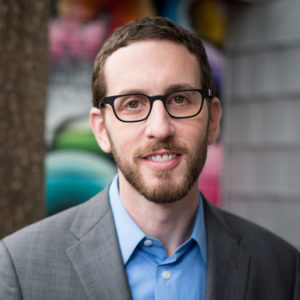
Scott Wiener
DemocraticWe recommend voting for Scott Wiener for U.S. House of Representatives, District 11.
Scott Wiener has spent the last decade as one of California's most persistent and effective pro-housing legislators. As a former San Francisco supervisor (https://www.scottwiener.com/meet-scott) and now the state senator representing District 11 (San Francisco) (https://sd11.senate.ca.gov/district), he has built a record on the issues that most directly shape San Francisco's quality of life and cost of living: housing production, transit, and government's ability to actually deliver.
In this field, Wiener stands out because he has already passed big, controversial laws in hostile political conditions — and that matters in Washington, where rhetoric is cheap and follow-through is not. Like every candidate, there are things we don't align with Wiener on (his positions on AI regulation and public safety diverge from ours in places), but he's still the best choice for getting results.
"Results over rhetoric. My job isn't to maintain ideological purity; it's to improve people's lives."
Scott Wiener, State Senator, District 11
Why vote for Scott Wiener?
Scott Wiener's top policy goals are:
- Build more housing to lower the cost of living
Wiener's strongest argument in this race is simple: he has actually passed pro-housing law at scale. SB 35 (https://leginfo.legislature.ca.gov/faces/billNavClient.xhtml?bill_id=201720180SB35) forced cities that weren't building enough housing to approve qualifying projects automatically. SB 423 (https://leginfo.legislature.ca.gov/faces/billNavClient.xhtml?bill_id=202320240SB423) extended and tightened that framework. And SB 79 (https://sd11.senate.ca.gov/news/governor-newsom-signs-senator-wieners-landmark-law-build-more-homes-near-public-transit), signed in 2025, legalized mid-rise apartment buildings near major transit stops throughout California. Those laws did not solve California's housing crisis on their own, but they changed the terms of the fight — making it harder for cities to dodge their housing obligations and easier to get badly needed homes approved.
But state law can only do so much. The country is short 8 million homes, and Congress controls the federal tools that decide how housing gets paid for and built — tax credits, Section 8 vouchers, and environmental review rules. Wiener wants to expand housing tax credits, fund rental assistance, reward cities that build, and cut through federal red tape. He treats housing as both a building problem and a rules problem. We need someone in Congress who gets how permitting, timelines, and financing keep homes from getting built.
- Protect transit and urban infrastructure San Francisco depends on
San Francisco's affordability depends on whether people can get around the city and region reliably. In 2023, Muni and BART were staring down a multi-billion-dollar fiscal cliff (https://sfstandard.com/2023/05/31/public-transit-state-budget-scott-wiener-gavin-newsom-transportation/) that threatened service cuts across the region. Wiener built the coalition (https://sfstandard.com/2023/02/09/wieners-big-ask-in-sacramento-a-lifeline-for-bart-muni/) that kept both systems running — bringing together labor, environmental groups, suburban counties, business associations, and urban riders to secure $1.1 billion in emergency state funding (https://www.kqed.org/news/11952821/1-1-billion-state-bailout-proposed-for-transit-agencies-facing-fiscal-cliff).
That funding bought time, not a permanent fix. With federal COVID relief exhausted and ridership still well below pre-pandemic levels, Bay Area transit is now facing another fiscal cliff in 2026 (https://www.bart.gov/about/financials/crisis) — BART alone is staring at a $376 million deficit, and Muni faces 50% service cuts without new revenue. Wiener's response was SB 63, the Connect Bay Area Act (https://sd11.senate.ca.gov/news/senators-wiener-and-arreguin-announce-bill-authorize-bay-area-public-transit-funding-measure), which authorizes a regional sales tax measure on the November 2026 ballot that would generate roughly $980 million per year (https://mtc.ca.gov/news/governor-signs-bill-authorizing-bay-area-voters-consider-2026-transit-measure) to stabilize transit across five Bay Area counties. He has done this work twice now — and he is not done.
In Congress, he wants to fix how the federal government funds transit, fight for money to keep trains running (not just build new things), and protect clean energy transit programs from getting cut. Too many politicians talk about transit as branding. Wiener has spent years doing the hard work of keeping it alive.
- A record of governing, not just campaigning
The next Congress will be a difficult environment for a junior Democratic House member from San Francisco. Wiener's argument for why he can still get things done is credible: he has passed over 100 bills (https://sd11.senate.ca.gov/biography) in the state legislature, often against powerful opposition. He has authored major laws not just on housing but also on mental-health and addiction treatment coverage (SB 855) (https://www.gov.ca.gov/2020/09/25/governor-newsom-signs-bills-to-expand-access-to-quality-behavioral-health-care-for-all-californians-help-homeless-californians-suffering-extreme-mental-illness-on-our-streets-sidewalks/) and net neutrality (SB 822) (https://leginfo.legislature.ca.gov/faces/billTextClient.xhtml?bill_id=201720180SB822). That willingness to pick fights, including with his own party, and the discipline to come back with a revised version when a coalition falls short, is exactly what federal legislating requires.
Why not the other candidates?
Connie Chan has built her political career around opposing things — blocking housing, fighting development, and siding with the most obstructionist factions on the Board of Supervisors. She actively tried to weaken San Francisco's housing plan at a time when the city desperately needed to build more. She has no meaningful legislative accomplishments to point to. Sending someone to Congress whose primary skill is saying no is not what San Francisco needs right now.
Saikat Chakrabarti is running on vibes, not a track record. He talks constantly about his connections to Alexandria Ocasio-Cortez, but you may have noticed that AOC herself hasn't uttered a single positive word about his campaign. There's a reason for that: she fired him. Chakrabarti has been in national politics for years but has no actual record of passing legislation or delivering results for any constituency. San Francisco deserves a representative who has actually done the work, not one who name-drops someone else's.
On other issues
Technology and AI: Wiener authored SB 1047, a first-in-nation AI regulation bill, which was opposed by SF-based tech companies big and small. Governor Newsom vetoed it in 2024. Wiener followed it up with SB 53, a much narrower transparency-focused bill that drew broader industry support. We think the Federal government has a role in setting up AI regulations and guardrails, and think Wiener's approach in California has been somewhat misguided. That said, voters in the tech sector should evaluate his track record on the merits rather than the headline, and importantly, compare him to the alternatives. Both Chakrabarti and Chan would sooner ban AI than regulate it.
Healthcare and treatment: SB 855 (https://www.gov.ca.gov/2020/09/25/governor-newsom-signs-bills-to-expand-access-to-quality-behavioral-health-care-for-all-californians-help-homeless-californians-suffering-extreme-mental-illness-on-our-streets-sidewalks/) expanded mental-health and addiction treatment coverage, and his campaign platform continues to emphasize lower drug costs and broader access to care.
Civil rights and immigration: Wiener has made LGBTQ rights and immigrant protections a major part of his public record. San Francisco voters care about that, and they should.
Public safety: Wiener opposed Prop 36 (https://ballotpedia.org/California_Proposition_36,_Drug_and_Theft_Crime_Penalties_and_Treatment-Mandated_Felonies_Initiative_(2024)), which GrowSF supported (/voter-guide/san-francisco-voter-guide-november-2024-election/) and nearly 70% of California voters passed (https://calmatters.org/politics/elections/2024/11/prop-36-california-election-result/). His approach to the fentanyl crisis emphasizes treatment access and federal interdiction funding over the accountability measures GrowSF favors. That's a real difference, but it doesn't change the overall calculus in this race.
Scott Wiener has shown he can pass hard laws on the issues San Francisco most needs solved. In a field where his opponents are defined by obstruction or aspiration, Wiener is defined by results. That's why he has our endorsement.
Source (https://growsf.org/voter-guide/san-francisco-voter-guide-june-2026-election/#house-district-11)
California Governor
Matt Mahan
DemocraticWe recommend voting for Matt Mahan for Governor.
As Mayor of San Jose, Mahan has done what most Sacramento candidates have only promised: unsheltered homelessness dropped nearly 23% (https://www.sanjoseinside.com/news/san-jose-reduces-unsheltered-homelessness-by-double-digits-in-latest-count/) from 2019 levels while the rest of the state got worse, San Jose earned the title of America's safest big city (https://www.nbcbayarea.com/news/local/san-jose-safest-large-city/3944670/), and thousands of new homes were unlocked through fee cuts and permitting reform. He is the only candidate in this race making a clear case for practical, results-oriented governance — and he has the record to back it up.
We're issuing a strong endorsement because his priorities and record are closely aligned with GrowSF's. Voters should know that Mahan entered the race late and is currently polling in the single digits (https://www.almanacnews.com/calmatters/2026/02/26/no-clear-frontrunner-for-governor-but-new-poll-names-five-with-the-best-shot/) in a crowded field. But early polls lag name recognition and ad spend, and we are more interested in whether a candidate is serious than whether they are currently generating the most media oxygen.
"California simply costs too much, and we need to get back to basics to make our state work again."
Matt Mahan, Mayor of San Jose
Matt Mahan's top policy goals are:
- Cut the cost of housing
California doesn't have a housing shortage because people don't want to build... it has one because government makes building too expensive, too slow, and too legally difficult. Mahan's housing plan (https://mahanforcalifornia.com/wp-content/uploads/2026/03/Mahan_HousingPlan_030426_9.pdf) attacks all three: cap excessive local fees, require timely approval of projects, simplify CEQA, and update building rules that drive unnecessary cost.
He didn't just design these policies in a campaign office, he enacted them. In San Jose, Mahan's slashed fees and approved construction tax waivers to get stalled downtown projects moving. He even launched an AI-powered pre-review system for building permits that reduced the most common cause of delays. For San Francisco voters, the governor's most important affordability job is making it easier to build housing. Mahan gets that, and he has already started doing it.
- End street encampments — with real accountability
California has spent billions on homelessness yet still has over 180,000 people unhoused (https://www.huduser.gov/portal/publications/2023-ahar-part-1-pit-estimates-of-homelessness.html). Mahan's diagnosis is blunt: the state built housing too slowly and too expensively, treated street homelessness as a lifestyle choice rather than a crisis requiring intervention, and let smaller cities off the hook by concentrating the problem in big cities.
His answer is the model he built in San Jose: quick-build interim housing that is cost-effective and dignified, a legal obligation to come indoors when shelter is available, and aggressive use of CARE Court and Prop 36 to mandate treatment for people with serious addiction and mental illness. The results are real: San Jose's unsheltered population dropped ~23% since 2019 (https://www.sanjoseinside.com/news/san-jose-reduces-unsheltered-homelessness-by-double-digits-in-latest-count/), a counter-trend against statewide numbers that continued to worsen. As Governor, he would apply a "functional zero unsheltered" metric statewide and tie funding to outcomes.
- Govern with outcomes, not headlines
One of the recurring frustrations with Sacramento is the gap between what gets announced and what gets delivered. Mahan has a specific fix: tie funding to results (https://mahanforcalifornia.com/), publish public dashboards so everyone can see what's working, and cut off programs that fail. His "Progress Audit" would review every state department, find the waste, and move those dollars to programs that actually deliver.
His case is simple and persuasive: before asking Californians to pay more in taxes, government should show it can do better with what it has. San Francisco voters know exactly why that matters. We have watched too many public systems tolerate cost overruns, delays, and weak follow-through while calling it progress.
On other issues
Public safety: Mahan supported Prop 36 (https://ballotpedia.org/California_Proposition_36,_Drug_and_Theft_Crime_Penalties_and_Treatment-Mandated_Felonies_Initiative_(2024)) when it was politically inconvenient to do so. He supports wider use of real-time intelligence tools, stronger enforcement against organized drug trafficking, and more scrutiny of repeat-offender failures. San Francisco voters looking for a Democrat who will talk plainly about crime and street disorder will find that here.
Education: Mahan wants schools to teach reading with phonics (which works), add more tutoring, and hold schools accountable for results. That matters to SF families who want kids to actually learn, not sit through more process.
Transit and infrastructure: He wants to tie transit funding to whether people actually ride it and whether it runs well. The Bay Area has 27 transit agencies — Mahan wants to cut that overhead. San Francisco benefits when the state rewards good service instead of just writing checks.
Behavioral health and fentanyl: Mahan wants to add at least 10,000 treatment beds by 2030 (https://mahanforcalifornia.com/prop-36/), make it easier to get people with serious mental illness into treatment through CARE Court, and use technology to go after drug trafficking networks. He'd move money from programs that aren't working to ones that are.
Mahan is not promising a fantasy version of California politics where every problem disappears if we spend more and say nicer things. He is making a more serious argument: build capacity faster, enforce standards, measure results, and stop funding failure. That is why we recommend voting for Matt Mahan for Governor.
Source (https://growsf.org/voter-guide/san-francisco-voter-guide-june-2026-election/#governor)
California Lieutenant Governor
Josh Fryday
DemocraticWe recommend voting for Josh Fryday for Lieutenant Governor.
The Lieutenant Governor sits on the State Lands Commission, holds voting seats on the UC Regents, CSU Trustees, and Community Colleges Board of Governors, and chairs the Commission for Economic Development. Most candidates treat this office as a stepping stone. Fryday treats it as a job — and he has a specific plan for every one of those tools.
His top priority is housing, and his plan is the most ambitious in this field. California's public universities and state agencies sit on vast amounts of developable land near jobs and transit. Fryday wants to use his board votes to push every UC, CSU, and community college campus to build student and workforce housing on that land — with a target of a million units committed or permitted on public and campus land, tracked and reported publicly. The model already exists: UC Irvine's University Hills provides below-market-rate housing for faculty and staff on university land through long-term leases with developers. Fryday wants to scale that across every campus in the state. He'd also use the State Lands Commission to unlock surplus state parcels near job centers and transit corridors for housing production.
"We have become the party of good intentions and I will make it my top priority to refocus us on the only thing that matters, which is results."
Josh Fryday, Candidate for Lieutenant Governor
The Lieutenant Governor also chairs the Commission for Economic Development — a body that hasn't met in over 15 years. Fryday plans to relaunch it, bringing together business, labor, and higher education leaders to coordinate on workforce needs, clean energy investment, and the business environment. It's exactly the kind of dormant tool a motivated Lieutenant Governor should be dusting off.
Fryday would use the State Lands Commission to fast-track permitting for offshore wind and solar on public lands. Interconnection wait times for new projects have ballooned from under two years to over five — and building at the sites of retiring fossil fuel infrastructure could cut those timelines to under a year. He also supported extending the Diablo Canyon nuclear lease, a pragmatic call that prioritizes carbon-neutral energy production over ideological purity.
California's construction workforce has been hollowed out, driving up labor costs and slowing down the housing production the state desperately needs. Fryday built CaliforniaVolunteers into the largest service corps in the country as California's Chief Service Officer, and he wants to expand apprenticeships, community college-to-career pipelines, and bring trade certifications into high schools through "credit for prior learning" programs — so students can earn credentials for real work experience before they graduate. His father worked in construction, and he's been blunt about the fact that California has valued four-year degrees over the trades for too long.
Source (https://growsf.org/voter-guide/san-francisco-voter-guide-june-2026-election/#lieutenant-governor)